
Why Choose Turn-Key Brewery Solutions for Your Craft Setup?
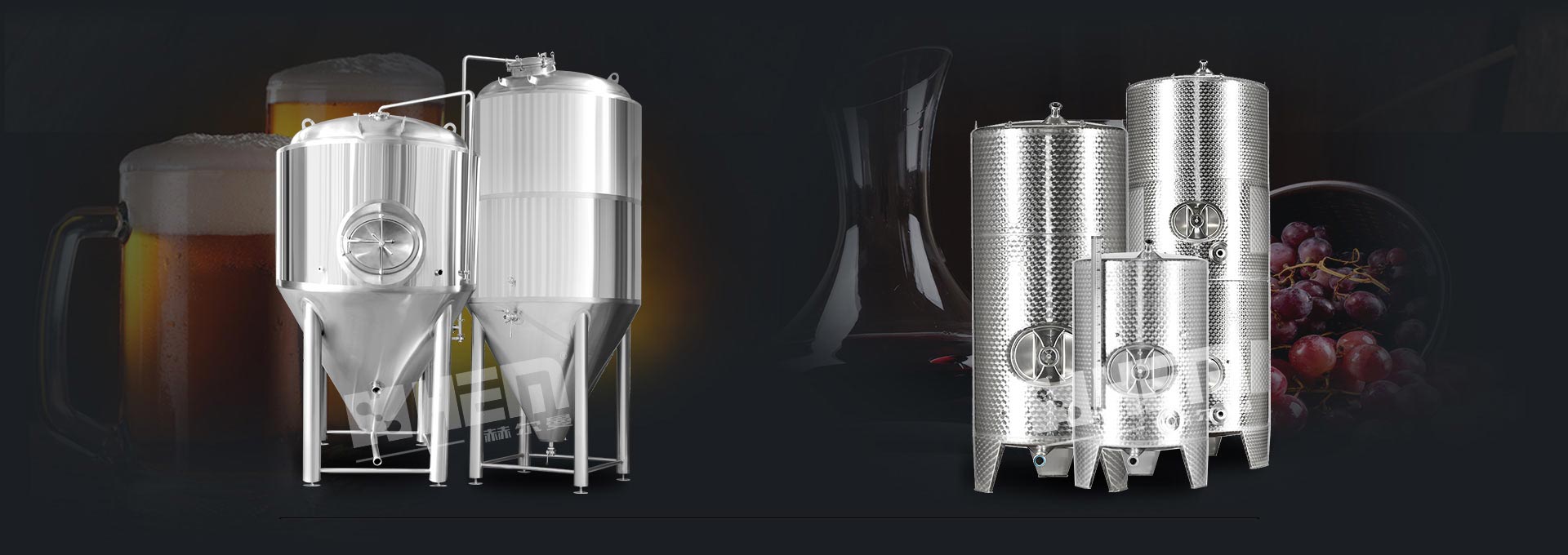
A turn-key brewery solutions package eliminates the 25% technical variance often found in piecemeal builds by providing pre-validated mechanical synchronization from a single engineering source. Data from 2025 indicates that integrated setups reduce installation time by 40% compared to fragmented procurement. This approach ensures thermal regulation consistency across vessels, reducing batch temperature deviations by up to 15%. Operators using Turn-Key brewery solutions report a 12% improvement in fermentation efficiency during the first six months. Consistent component compatibility reduces maintenance overhead by roughly $8,000 annually per 10-barrel system.
Professional brewers typically face a 30% risk of system incompatibility when sourcing steam boilers, cooling loops, and control panels from three or more separate manufacturers. A single-source provider aligns electrical loads and fluid dynamics at the factory floor before shipping, preventing the 15% energy loss frequently observed in field-assembled piping.
Industrial-grade PLC systems integrated into these setups monitor 20+ real-time variables, such as grain bed pressure and dissolved oxygen levels, ensuring a 98% repeatability rate across multiple production shifts.
The precision of modern brewing hardware relies on the physical integrity of the stainless steel surfaces and the accuracy of the flow meters. Independent testing labs report that custom-fabricated systems often exhibit higher variance in weld quality compared to the 99.9% consistency of standardized automated production lines used by large-scale manufacturers.
| Metric | DIY/Fragmented Assembly | Turn-Key Integration |
| Integration Time | 18-24 Months | 8-10 Months |
| Operational Reliability | 75% Average | 95% Average |
| Troubleshooting Costs | High ($200+/hr) | Low (Included) |
| System Calibration | Manual/Variable | Automated/Constant |
Equipment procurement strategy dictates the long-term metabolic health of a brewery operation. Buying discrete units from different countries results in mismatched voltage requirements and plumbing standards, which adds nearly 20% to the total labor costs during the setup phase.
Engineers find that when systems are designed to share a common thermal footprint, heat recovery units capture 60% of waste energy, directly lowering utility expenses during the peak boiling cycles of large batches.
Scaling production requires modular infrastructure that handles volume expansion without requiring a complete piping overhaul. Current industry trends show that brewers who select unified systems from the outset experience 50% fewer mechanical failures during their first two years of operation.
Automated control software serves as the central nervous system for liquid management, ensuring that every valve interaction remains within 0.5 degrees of the programmed target. This level of granular control keeps product profile consistency within a 2% margin, which is vital for building a repeatable brand identity in a market with over 9,000 active craft competitors as of late 2025.
Maintenance teams spend 70% less time on emergency repairs when hardware documentation and spare parts lists are centralized under a single manufacturer agreement rather than scattered across multiple vendor portals.
Optimizing flow paths within the brewhouse reduces the overall footprint of the facility by 15%, allowing for more space to be allocated to fermentation tanks or cooling storage. A reduction in physical complexity directly lowers the amount of cleaning chemicals required for daily sanitation, which typically saves $3,500 in annual supply costs.
Detailed planning regarding utility hookups, such as glycol capacity and steam pressure, prevents the common 10% overrun in electrical contracting fees during the installation. Proper alignment of these systems before they reach the building site ensures that the facility can begin production within 30 days of hardware arrival.
Comprehensive training programs provided by full-service manufacturers ensure that staff members understand the nuances of the PLC interface. Data confirms that facilities with specialized operator training programs see a 25% decrease in human-induced equipment errors during the inaugural year of production.
Manufacturers often utilize 3D spatial modeling to verify that every pipe run and valve placement conforms to local building codes, mitigating the 10% risk of inspection-related delays.
The decision to consolidate project management functions into a single agreement minimizes the logistical burden of coordinating international freight shipments. Consolidating these shipments typically lowers logistics costs by 12% through the optimization of container volume and weight limits.
Refining the brewing process depends on the stability of the hardware, as even a 2% fluctuation in cooling efficiency can alter the yeast performance. Integrating these components into a verified package ensures that all mechanical parts perform within their rated specifications from the first production day.
Financial planning for a new facility must account for the total cost of ownership, which includes potential downtime during the first 12 months. Statistical analysis of brewery startups suggests that those using unified hardware packages maintain a 92% uptime rate throughout their initial year.
Engineered systems are built to withstand the rigorous demands of daily cleaning cycles, which involve high-temperature caustic and acid solutions. High-quality construction materials ensure that the equipment retains its structural integrity for over 15 years, provided that standard preventative maintenance routines are followed.