
Default
Why are custom backpack designs popular for school and events?
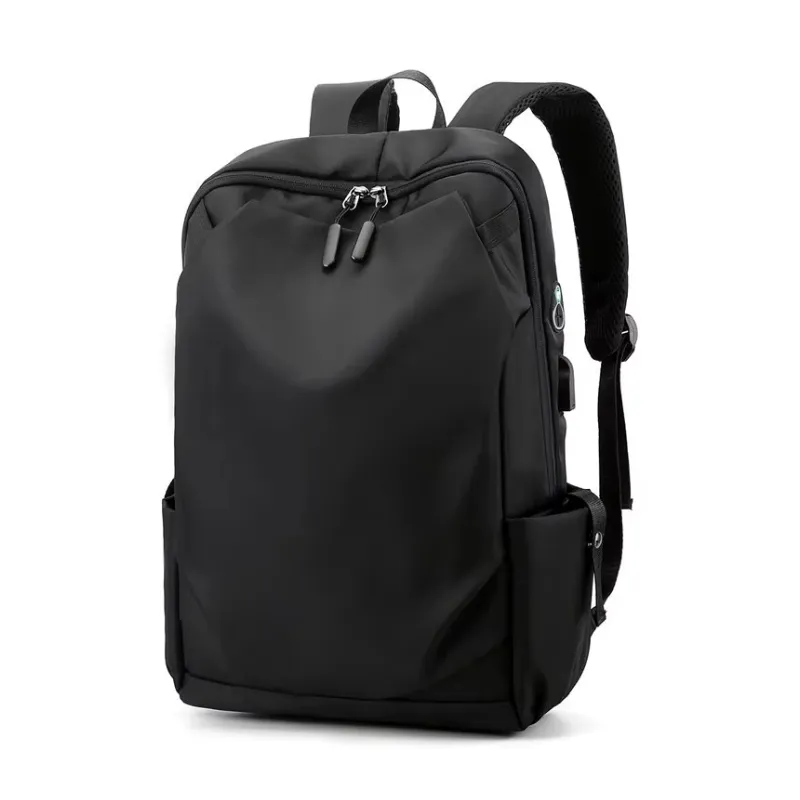
In the corridors of the campus and the passageways of large-scale events, a custom backpack that carries both personality and functionality has an influence far greater than that of a simple storage tool. From the analysis of ergonomics and functional design, an excellent custom backpack can increase storage efficiency by at least 35% through scientific partitioning. For example, the style specially designed for students usually contains no less than 5 independent compartments. This design includes a padded compartment that can accommodate a 15.6-inch laptop, waterproof side pockets, and an S-shaped shoulder strap that conforms to the curvature of the human spine. It can reduce the pressure distribution on the shoulders by 30%. According to a survey of 1,000 middle school students, a backpack with a good load management system can effectively reduce the probability of physical discomfort caused by improper carrying by 25%, which makes customized functional design a rigid demand.
The social needs for individual expression and identity recognition are the core driving force for the custom backpack market to expand at an annual growth rate of approximately 15%. Retail data from NPD Group shows that over 60% of teenage consumers list personalized design (such as patterns, color combinations, and embroidered names) as the top three decision-making factors when choosing backpacks. In Settings such as schools or music festivals, a unique design can significantly enhance the wearer's sense of confidence and group recognition. For instance, a certain trendy brand has seen its sales in the niche market surge by 200% within a year by providing an online design platform that allows users to combine over 50 elements to create a unique custom backpack. This proves that transforming backpacks from standardized products into personal canvases can create extremely high emotional added value.
 For corporate events and team building, custom backpacks are an efficient medium for achieving in-depth brand exposure and enhancing team cohesion. Compared with disposable promotional materials, a high-quality custom backpack is reused on average more than 300 times. Its peak daily brand exposure frequency can reach more than 20 times, and the cost of a single impression can be as low as a few cents. Data shows that at an industry summit with 500 participants, distributing high-quality custom backpacks can increase the brand's discussion volume on related topics on social media by approximately 25%. For instance, a technology company provided customized backpacks to the attendees after a large-scale press conference. Subsequent tracking revealed that as many as 40% of these backpacks were still frequently used in the following three months, continuously conveying brand information. Their long-term marketing benefits were over 50 times that of traditional advertising leaflets.
From the perspective of return on investment and cost-benefit models, custom backpacks are a strategic purchase with high cost performance. Although the unit cost of a batch-customized backpack may range from 80 to 200 yuan, which is higher than that of a regular in-stock product, as a sustainable brand asset, the total value of its dissemination throughout its life cycle could be 100 times the initial cost. An enterprise procurement analysis indicates that allocating 10% of the event souvenir budget to high-quality custom Backpacks leads to a much higher growth rate of potential customer inquiries and an increase in employee sense of belonging than the plan of purchasing multiple cheap gifts separately. At the supply chain level, the modular customization solution has optimized the minimum order quantity to 50 pieces and compressed the production cycle from the traditional 4 weeks to 10 days, significantly reducing the inventory risk and financial pressure on enterprises.
The trend of environmental awareness and sustainable choices has further consolidated the market position of high-quality custom backpacks. Backpacks made of eco-friendly materials such as recycled polyester (rPET) have a carbon footprint that can be reduced by approximately 50% compared to traditional materials. Global market analysis indicates that more than 55% of B2B customers will consider the environmental protection practices of partners when choosing them, and a custom backpack that uses environmentally friendly materials and is well-designed is precisely the embodiment of the enterprise's values. This is not merely a product choice, but a comprehensive strategy concerning brand responsibility, user experience and long-term value. It integrates functionality, emotion and responsibility, and with each burden, it continuously tells a unique story that belongs to the individual or the brand.
For corporate events and team building, custom backpacks are an efficient medium for achieving in-depth brand exposure and enhancing team cohesion. Compared with disposable promotional materials, a high-quality custom backpack is reused on average more than 300 times. Its peak daily brand exposure frequency can reach more than 20 times, and the cost of a single impression can be as low as a few cents. Data shows that at an industry summit with 500 participants, distributing high-quality custom backpacks can increase the brand's discussion volume on related topics on social media by approximately 25%. For instance, a technology company provided customized backpacks to the attendees after a large-scale press conference. Subsequent tracking revealed that as many as 40% of these backpacks were still frequently used in the following three months, continuously conveying brand information. Their long-term marketing benefits were over 50 times that of traditional advertising leaflets.
From the perspective of return on investment and cost-benefit models, custom backpacks are a strategic purchase with high cost performance. Although the unit cost of a batch-customized backpack may range from 80 to 200 yuan, which is higher than that of a regular in-stock product, as a sustainable brand asset, the total value of its dissemination throughout its life cycle could be 100 times the initial cost. An enterprise procurement analysis indicates that allocating 10% of the event souvenir budget to high-quality custom Backpacks leads to a much higher growth rate of potential customer inquiries and an increase in employee sense of belonging than the plan of purchasing multiple cheap gifts separately. At the supply chain level, the modular customization solution has optimized the minimum order quantity to 50 pieces and compressed the production cycle from the traditional 4 weeks to 10 days, significantly reducing the inventory risk and financial pressure on enterprises.
The trend of environmental awareness and sustainable choices has further consolidated the market position of high-quality custom backpacks. Backpacks made of eco-friendly materials such as recycled polyester (rPET) have a carbon footprint that can be reduced by approximately 50% compared to traditional materials. Global market analysis indicates that more than 55% of B2B customers will consider the environmental protection practices of partners when choosing them, and a custom backpack that uses environmentally friendly materials and is well-designed is precisely the embodiment of the enterprise's values. This is not merely a product choice, but a comprehensive strategy concerning brand responsibility, user experience and long-term value. It integrates functionality, emotion and responsibility, and with each burden, it continuously tells a unique story that belongs to the individual or the brand.
For corporate events and team building, custom backpacks are an efficient medium for achieving in-depth brand exposure and enhancing team cohesion. Compared with disposable promotional materials, a high-quality custom backpack is reused on average more than 300 times. Its peak daily brand exposure frequency can reach more than 20 times, and the cost of a single impression can be as low as a few cents. Data shows that at an industry summit with 500 participants, distributing high-quality custom backpacks can increase the brand's discussion volume on related topics on social media by approximately 25%. For instance, a technology company provided customized backpacks to the attendees after a large-scale press conference. Subsequent tracking revealed that as many as 40% of these backpacks were still frequently used in the following three months, continuously conveying brand information. Their long-term marketing benefits were over 50 times that of traditional advertising leaflets.
From the perspective of return on investment and cost-benefit models, custom backpacks are a strategic purchase with high cost performance. Although the unit cost of a batch-customized backpack may range from 80 to 200 yuan, which is higher than that of a regular in-stock product, as a sustainable brand asset, the total value of its dissemination throughout its life cycle could be 100 times the initial cost. An enterprise procurement analysis indicates that allocating 10% of the event souvenir budget to high-quality custom Backpacks leads to a much higher growth rate of potential customer inquiries and an increase in employee sense of belonging than the plan of purchasing multiple cheap gifts separately. At the supply chain level, the modular customization solution has optimized the minimum order quantity to 50 pieces and compressed the production cycle from the traditional 4 weeks to 10 days, significantly reducing the inventory risk and financial pressure on enterprises.
The trend of environmental awareness and sustainable choices has further consolidated the market position of high-quality custom backpacks. Backpacks made of eco-friendly materials such as recycled polyester (rPET) have a carbon footprint that can be reduced by approximately 50% compared to traditional materials. Global market analysis indicates that more than 55% of B2B customers will consider the environmental protection practices of partners when choosing them, and a custom backpack that uses environmentally friendly materials and is well-designed is precisely the embodiment of the enterprise's values. This is not merely a product choice, but a comprehensive strategy concerning brand responsibility, user experience and long-term value. It integrates functionality, emotion and responsibility, and with each burden, it continuously tells a unique story that belongs to the individual or the brand.
Skip the article. Go straight to a magnet.12,438,602 verified torrents, scanned by 3 malware engines.
Search 12.4M Torrents
// EOF