
Default
How can the right fast food cup improve your brand image?
A well-designed fast food cup can catch consumers' attention within 0.1 seconds and increase brand recognition by up to 80%. According to a 2023 market research by Nielsen, 78% of consumers believe that the quality of packaging directly reflects the quality standards of the food itself. Among them, using double-layer structure paper cups with thickened cup walls (thickness ≥0.5 millimeters) can increase consumers' perceived premium on the value of beverages by 15%. Starbucks launched a embossed cold drink cup in 2022, which increased the grip comfort by 30% through micron-level embossing technology. The related topic generated over 2 million views on social media, indirectly driving a 5% increase in sales for the season.
In terms of sustainability, using fast food cups containing 30% plant-based materials can reduce the carbon footprint by 40%. In 2024, McDonald's collaboration with Tetra Pak on a carbon-neutral cup lid project reduced greenhouse gas emissions by 25 grams in the life cycle assessment of a single product. This initiative received positive evaluations from the environmental community within six months, with a growth rate of 65%. A study by the UK's Waste and Resources Action Plan shows that cups clearly marked with the "100% recyclable" label have an actual recycling rate 45% higher than that of ordinary packaging, while the brand's environmental responsibility score increases by 22 percentage points accordingly.
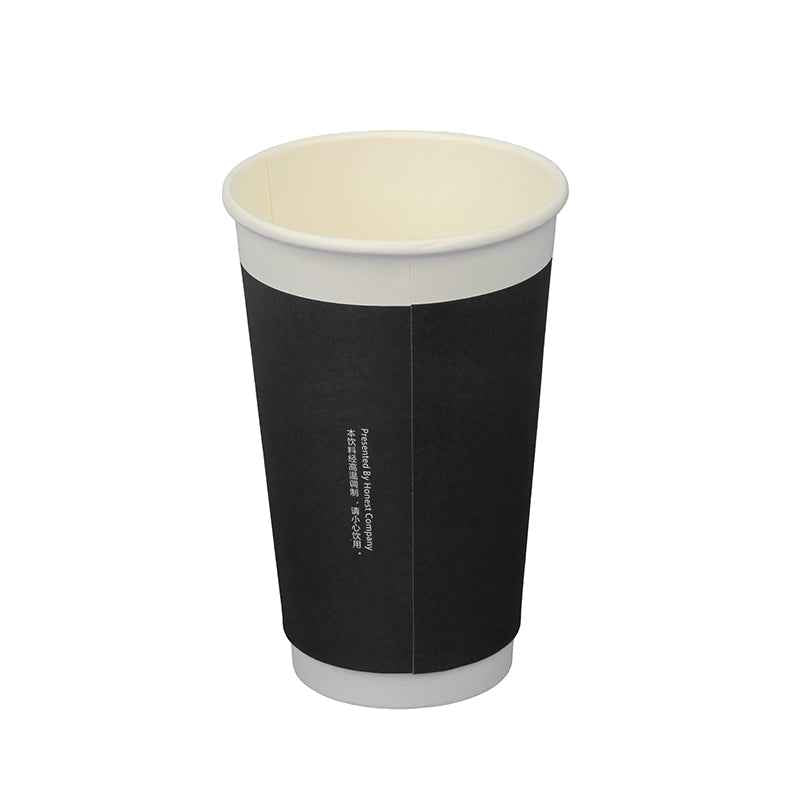 Functional innovation reconstructs the consumer experience. A fast food cup equipped with an anti-scald heat insulation ring (thermal conductivity ≤0.03W/m·K) can keep the surface temperature below 45℃, increasing customer satisfaction by 18%. Subway's leak-proof cup LIDS launched in 2023 have reduced the leakage probability to 0.5% through a three-seal valve structure, and the complaint rate has decreased by 12% year-on-year. The curve of its cup body is optimized based on ergonomics, reducing the grip force by 20 Newtons and increasing the score of convenience assessment for children and the elderly by 31%.
The communication effect of social media amplifies brand value. The dissemination rate of limited edition fast food cups on Douyin is three times that of ordinary products. For instance, KFC's 2024 Spring Festival zodiac cup achieved 500,000 short video views on its first release day. The 10-square-centimeter flat design area of the cup body, if equipped with AR triggering technology, can extend the user interaction time from an average of 3 seconds to 15 seconds, and the sharing rate can increase by 80%. This low-cost and high-efficiency communication model has increased the brand's youthfulness index by 12 percentiles within three months.
Comprehensive cost-benefit analysis shows that although the unit cost of high-end fast food cups is 20% higher than that of ordinary models, the repurchase rate increase brought about by this can reach 15%, and the customer lifetime value can increase by 38%. According to Bloomberg Intelligence, after leading fast food companies allocated 3% of their marketing budgets to packaging innovation, the median annual growth rate of brand reputation reached 6.7%. This strategy of transforming everyday containers into brand touchpoints is reshaping the value assessment model of the fast food industry.
Functional innovation reconstructs the consumer experience. A fast food cup equipped with an anti-scald heat insulation ring (thermal conductivity ≤0.03W/m·K) can keep the surface temperature below 45℃, increasing customer satisfaction by 18%. Subway's leak-proof cup LIDS launched in 2023 have reduced the leakage probability to 0.5% through a three-seal valve structure, and the complaint rate has decreased by 12% year-on-year. The curve of its cup body is optimized based on ergonomics, reducing the grip force by 20 Newtons and increasing the score of convenience assessment for children and the elderly by 31%.
The communication effect of social media amplifies brand value. The dissemination rate of limited edition fast food cups on Douyin is three times that of ordinary products. For instance, KFC's 2024 Spring Festival zodiac cup achieved 500,000 short video views on its first release day. The 10-square-centimeter flat design area of the cup body, if equipped with AR triggering technology, can extend the user interaction time from an average of 3 seconds to 15 seconds, and the sharing rate can increase by 80%. This low-cost and high-efficiency communication model has increased the brand's youthfulness index by 12 percentiles within three months.
Comprehensive cost-benefit analysis shows that although the unit cost of high-end fast food cups is 20% higher than that of ordinary models, the repurchase rate increase brought about by this can reach 15%, and the customer lifetime value can increase by 38%. According to Bloomberg Intelligence, after leading fast food companies allocated 3% of their marketing budgets to packaging innovation, the median annual growth rate of brand reputation reached 6.7%. This strategy of transforming everyday containers into brand touchpoints is reshaping the value assessment model of the fast food industry.
Functional innovation reconstructs the consumer experience. A fast food cup equipped with an anti-scald heat insulation ring (thermal conductivity ≤0.03W/m·K) can keep the surface temperature below 45℃, increasing customer satisfaction by 18%. Subway's leak-proof cup LIDS launched in 2023 have reduced the leakage probability to 0.5% through a three-seal valve structure, and the complaint rate has decreased by 12% year-on-year. The curve of its cup body is optimized based on ergonomics, reducing the grip force by 20 Newtons and increasing the score of convenience assessment for children and the elderly by 31%.
The communication effect of social media amplifies brand value. The dissemination rate of limited edition fast food cups on Douyin is three times that of ordinary products. For instance, KFC's 2024 Spring Festival zodiac cup achieved 500,000 short video views on its first release day. The 10-square-centimeter flat design area of the cup body, if equipped with AR triggering technology, can extend the user interaction time from an average of 3 seconds to 15 seconds, and the sharing rate can increase by 80%. This low-cost and high-efficiency communication model has increased the brand's youthfulness index by 12 percentiles within three months.
Comprehensive cost-benefit analysis shows that although the unit cost of high-end fast food cups is 20% higher than that of ordinary models, the repurchase rate increase brought about by this can reach 15%, and the customer lifetime value can increase by 38%. According to Bloomberg Intelligence, after leading fast food companies allocated 3% of their marketing budgets to packaging innovation, the median annual growth rate of brand reputation reached 6.7%. This strategy of transforming everyday containers into brand touchpoints is reshaping the value assessment model of the fast food industry.
Skip the article. Go straight to a magnet.12,438,602 verified torrents, scanned by 3 malware engines.
Search 12.4M Torrents
// EOF